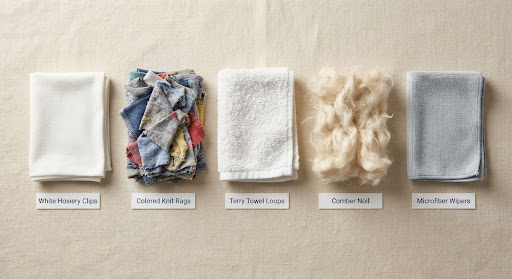
New Cotton Rags vs Recycled Rags: What Industrial Buyers Should Know
Almost every wiping rag supplier globally claims to sell high-quality material, but the actual fabric behind that claim can vary enormously. Some rags are cut from brand new, unused mill fabric that never touched a consumer, while others are manually sorted from used clothing collected after it was worn.
At Al Hadi Rags, we manufacture and export both types. We know that neither option is automatically wrong for your business. The right choice depends entirely on what you are cleaning, how sensitive that surface is, and how much your procurement budget can flex.
This guide breaks down the real differences between new and recycled rags so you can make that operational call with absolute confidence.
Where the Fabric Actually Comes From
New Virgin Cotton
New cotton rags are cut directly from the fabric left over during premium garment and textile manufacturing. This material never left the factory as a finished piece of clothing, so it has absolutely no history of being worn, washed, or handled by a previous owner. It is clean, fresh, and consistent.
Recycled Cotton
Recycled cotton rags, by contrast, are sorted and cut from post-consumer used clothing after it has already served its original purpose. A reputable supplier grades this material carefully before baling and shipping it, but the starting point is still consumer-used fabric rather than fresh factory waste.
Comparing the Two on What Matters Most
Industrial buyers usually care about a handful of highly practical factors when choosing between these two categories. Here is how they stack up side by side on the factory floor:
- Contamination Risk: New cotton has zero risk, since it was never worn. Recycled rags carry a small risk of leftover buttons, zippers, or metal debris even after strict sorting.
- Material Consistency: New cotton offers uniform weight, thickness, and texture across an entire bale. Recycled rags can vary slightly depending on the specific original garments sorted into that batch.
- Purchase Cost: Recycled rags are generally significantly less expensive, since the raw secondhand material itself costs less to source in bulk.
- Softness and Absorbency: Both can perform exceptionally well here, particularly t-shirt based recycled rags, which are naturally very soft and highly absorbent.
- Overall Best Fit: New cotton strictly suits precision and contamination-sensitive work, while recycled rags suit general, heavy-duty cleanup where the cost per rag matters more than perfection.
When New Cotton Is Worth the Extra Cost
Some jobs simply cannot risk a stray button scratching a surface or a synthetic thread showing up where it should not. In these high-stakes situations, the extra upfront cost of new cotton rags is incredibly easy to justify.
- Automotive paint booths and detailing work
- Electronics assembly and sensitive lens cleaning
- Marine detailing on expensive gel coat and polished surfaces
- Furniture finishing, staining, and fine woodworking
If your business operates in any of these precision spaces, our new virgin cotton wiping rags range is built specifically for this kind of zero-defect work. Products like Flannel Rags and Single Jersey White Knit Rags are industry standards for these applications.
When Recycled Rags Make More Sense
For general, heavy cleanup, recycled cotton rags are a genuinely smart, economical choice rather than a compromise. Many facilities use massive volumes of rags every single week, and paying a premium for every single disposable cloth rarely makes financial sense.
- Warehouse and general facility cleanup
- Routine machine shop maintenance and heavy grease removal
- Daily janitorial and plumbing tasks
- Any high-volume job where cost per rag aggressively drives the procurement decision
Our recycled cotton wiping rags category is professionally sorted and graded specifically to perform well in these demanding, everyday situations while protecting your budget.
A Simple Way to Decide
If you are still unsure which category fits your business operations, ask your floor managers one simple question first:
Would a stray thread, a hidden button, or a slight inconsistency in the fabric cause a real, expensive problem on the surface you are cleaning?
If the answer is yes, new virgin cotton is worth the investment to prevent rework. If the answer is no, sorted recycled rags will likely save you significant money without sacrificing performance where it actually matters.
Frequently Asked Questions
Can I order both new and recycled rags from the same supplier?
Yes. Many large buyers use new cotton for their precision tasks and recycled cotton for their general maintenance cleanup, consolidating both into a single shipping container to save on freight.
Is recycled cotton lower quality than new cotton?
Not necessarily. A well-sorted recycled rag (like our Colour Knit T-Shirt Rags) can perform exceptionally well for general heavy cleaning. It simply carries a small, inherent risk of inconsistency that virgin new cotton does not have.
Which product should I start with if I am unsure?
Our Single Jersey White Knit Rags are the most versatile starting point on the new cotton side, and our White Knit T-Shirt Rags are the equivalent starting point on the recycled side.
Do prices vary a lot between the two categories?
Yes. Recycled rags are generally less expensive since the raw post-consumer material costs less to source. New cotton carries a premium directly tied to its manufacturing consistency and contamination-free sourcing.
Can I request samples of both before deciding?
Yes, and we strongly recommend it. Comparing a physical sample from each category side by side is the easiest, most accurate way to confirm which one fits your specific job. Request a sample here.
Ready to compare for yourself? Browse our new virgin cotton wiping rags or recycled cotton wiping rags categories, or go straight to Request a Quote with your specific requirements.